AI Outbound Sales Calls: A Smarter Way to Run High-Volume Prospecting

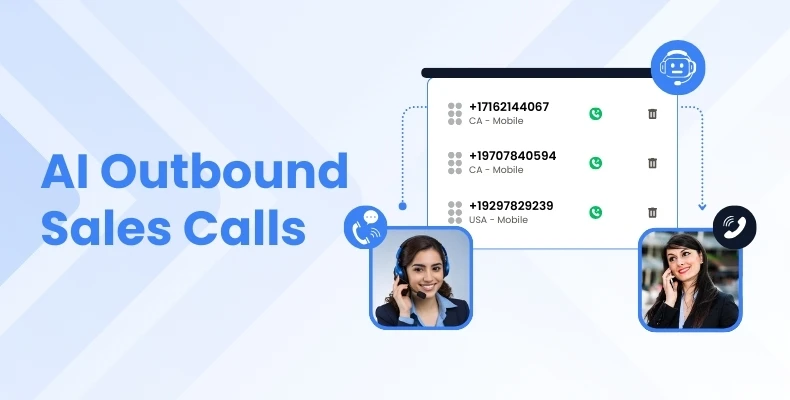
Outbound sales are limited by efficiency and not effort. On average, it takes close to 18 call attempts to reach a prospect, yet only a small percentage of those conversations move forward into meaningful next steps. Sales teams spend hours dialing numbers, leaving voicemails, and following up with leads that never respond.
As a result, sales teams that adopt AI-driven calling are seeing a clear shift in outbound performance. Almost 67% of organizations have adopted AI-powered dialing tools, and the results include higher connect rates, faster lead qualification, and more consistent outbound conversations compared to manual efforts.
In short, AI outbound calls are emerging as one of the most practical ways to scale high-volume prospecting without increasing manual effort. This blog explores how sales teams can use AI outbound calling to run more efficient, modern sales operations.
What AI Outbound Sales Calls Are
AI outbound sales calls are automated, voice-based conversations to handle the first layer of outbound calling with prospects, without requiring a human representative to be present on the line. It uses AI to dial leads, speak and carry on conversations naturally, understand the intent and responses to take action based on the conversation.
These are not typical robocalls or rigid scripts; AI outbound calls adapt in real time based on how prospects respond. The primary purpose is to start meaningful sales conversations and move qualified prospects forward without adding pressure.
How AI Outbound Sales Calls Work
AI outbound calling is not about robots calling customers. It is more like a structured workflow designed to replicate the early stages of a high-performing sales team process.
Here’s how that process typically works in practice.
Prospect Targeting and Call Initiation
Everything starts with data, and without it, outbound calling becomes directionless. An AI outbound system pulls prospect lists from the CRM, marketing automation tools, and uploaded lead files. Such lists are classified into the rules defined by you, such as job title, company size, industry, intent, and much more.
AI handles calls based on intent and dials prospects at the right time using historical data, time zones, and past engagement patterns. It helps in removing the guesswork from dialing and eliminating the wasted attempts.
Live Conversation Handling
Live conversation here means responding based on the prospect’s inputs, rather than using robotic responses that frustrate customers. This is not a static script. Here, AI will listen, adapt, and respond in real-time. It can adjust tone, match the pace of the conversation, and take timely follow-up actions based on the interaction.
The goal isn’t to close the deal on the call. It’s to hold a credible, relevant conversation that respects the prospect’s time and keeps them engaged long enough to determine fit.
Lead Qualification and Handoff
When everything is handled manually, it becomes difficult to focus on qualified and higher-value work. As the conversation unfolds, AI qualifies the lead according to classification such as budget range, role, authority, urgency, use case, and much more. Each response will be evaluated in real-time.
When a prospect meets the qualification criteria, AI initiates the handoff. This includes booking a meeting on the sales representative’s calendar, transferring a call, or logging the lead as sales-qualified call notes. This saves time for both prospects and sales teams.
CRM and Workflow Integration
Every interaction is automatically recorded and synced to your CRM. Call outcomes, transcripts, qualification data, objections, and next steps are logged instantly, no manual note-taking required.
This integration keeps sales and marketing aligned. Reps get full context before speaking with a prospect, managers gain visibility into pipeline activity, and operations teams can refine targeting and messaging based on real call data. The result is a closed-loop system where outbound calling feeds directly into your broader revenue workflow instead of living in isolation.
Why Sales Teams Are Moving to AI Calling
Sales teams are adopting AI calling because the traditional outbound calling model does not scale. Hiring more headcount is expensive, buyers expect faster responses, and AI calling helps close that gap.
Scale Without Hiring Pressure
Growing outbound capacity earlier meant hiring more representatives and hoping that productivity followed. AI changes that equation. A single AI calling system can handle hundreds of conversations without fatigue or burnout.
This also makes it easier to increase call volume without adding headcount. It’s a win-win situation. For leadership, it means more predictable outcomes, and for representatives, less pressure while working toward targets.
Consistent Conversations on Every Call
Each representative varies from the other: their tone, shift, way of messaging, and more. This creates inconsistency, leading to different conversations under the same brand.
Even the best reps vary. Tone shifts, scripts drift, and messaging evolves differently across the team. AI calling eliminates that inconsistency and ensures that prospects hear a clear, accurate story, whether it is the first or last call.
Faster Qualification and Response Times
Speed is considered one of the most significant advantages that AI brings into the outbound sales process. The AI system will not wait for task queues or availability; it will directly get into calls, take follow-ups, and also schedule callbacks without delay.
This speed matters. Leads contacted within 5 minutes are 21 times more likely to qualify than those contacted after 30 minutes. Faster contact significantly increases connect rates and qualification success, especially for inbound-sourced or high-intent leads. AI ensures no opportunity sits untouched because of bandwidth constraints.
Better Focus
AI doesn’t replace sales reps; it protects their time. By handling dialing, initial conversations, and early qualification, AI removes the most repetitive and draining parts of outbound work.
Human reps step in only when there’s real intent. They enter conversations with context, clear next steps, and a higher likelihood of closing. The result is better morale, higher productivity, and stronger performance across the sales team.
Where AI Outbound Calls Deliver the Most Value
AI calling is not just automation; it delivers measurable impact for sales teams. It bridges the gaps where traditional calling systems struggle. Follow-up fatigue and scheduling friction are significantly reduced when AI outbound calling is implemented.
Let’s look at where AI outbound calls deliver the most measurable value.
Cold Outreach at Scale
Cold calling has never been appealing to most sales representatives; it is tough due to time-consuming processes, effort, and unanswered calls. Only 2-3% of cold calls book meetings and connect, out of which 82% of buyers will accept meetings only when outreach feels relevant. This shows that cold calling works better when outreach is precise and relevant.
With AI, your cold outreach becomes data-driven and persistent instead of random and exhausting, meaning you get more meaningful conversations without burning out your SDR team.
Follow-Ups and Lead Reactivation
One thing remains consistent: follow-ups are often more important than the first call, and this is where most sales pipelines leak. Traditional SDRs often give up right after a few tries, and that should not be the case. There should be multiple touches to yield better results.
An AI system addresses this by scheduling follow-ups in structured and intelligent sequences. They can trigger callbacks, texts, voicemails, and emails based on prospect behavior, ensuring no lead goes dark. AI will further react to engagement signals 24/7 without failing.
Meeting Booking and Qualification
Did your sales representative make a hundred calls today and show effort? That’s not it. Calling large volumes of numbers does not matter; outcomes do. Booking the meeting with the right person at the right time after that call. The traditional handling of the outbound data meant manually juggling calendars, prioritising the customers according to requirement, and a lot more.
AI will automatically qualify prospects in real-time and will book meetings according to the criteria. Not only that, but AI qualifications have reported up to 50% increases in appointment bookings compared to unqualified cold outreach, while also cutting down on non-viable meetings that waste rep time.
Choose Rossy AI for AI Outbound Calling
AI outbound calling works when it is implemented in the right way. The sales team should be well-trained to operate and keep the work going. Well, Rossy AI is built with that reality in mind, where the learning curve is easy and fits your model.
Rossy AI focuses mainly on answering each call instantly, automatically books an appointment, carries out easy and smooth human-handoff, works 24/7 even during holidays, helps human agents by sending the summaries of conversations, and a lot more.
It sets every other AI outbound calling apart by mainly focusing on making calls automatically at the right time to the right people. No more wasting time on outreaching unqualified leads, just concentrate on more and better sales flow.
If you’re exploring AI outbound calling, it’s time to book a demo and see how Rossy AI helps your team focus on the work that actually moves revenue forward.
See More Blogs

How to Improve CSAT Score using AI: 7 Practical Tips That Work
One bad customer experience can undo a hundred good ones. That’s how businesses operate in 2026. Customers have more choices,…
Read More
7 Proven Call Reduction Strategies to Boost Customer Support Efficiency
Every customer support interaction tells a different story. Sometimes, it is a simple call that should not have needed a…
Read More